Materials and Sustainable Research
Structural Steel

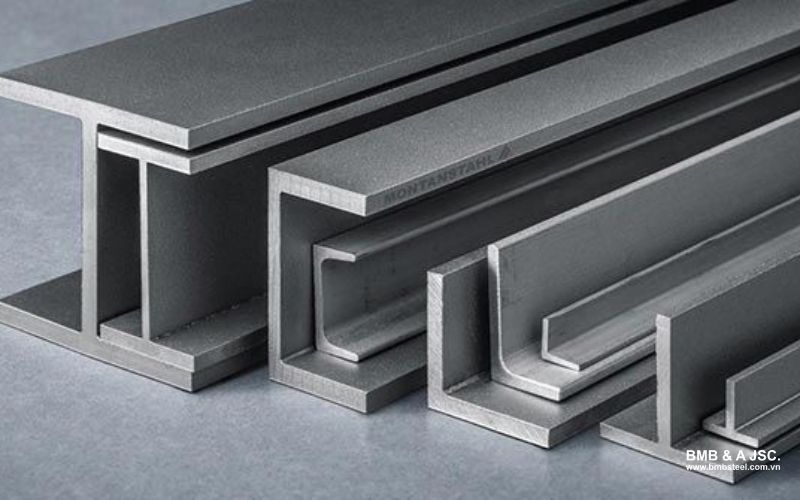
Structural steel is often used in modern construction to create the main structural frame of buildings, including columns and beams that support the structure. Because steel is very strong, it allows architects to design large buildings and unusual geometric forms.
Steel is also considered a sustainable building material because it can be recycled many times without losing its quality, which reduces the need for new materials (Worldsteel, 2025).
In my project structural steel will form the main frame of the two pyramid structures and support the facade panels and the roof.
Steel is also considered a sustainable building material because it can be recycled many times without losing its quality, which reduces the need for new materials (Worldsteel, 2025).
In my project structural steel will form the main frame of the two pyramid structures and support the facade panels and the roof.
Aluminium Cladding Panels

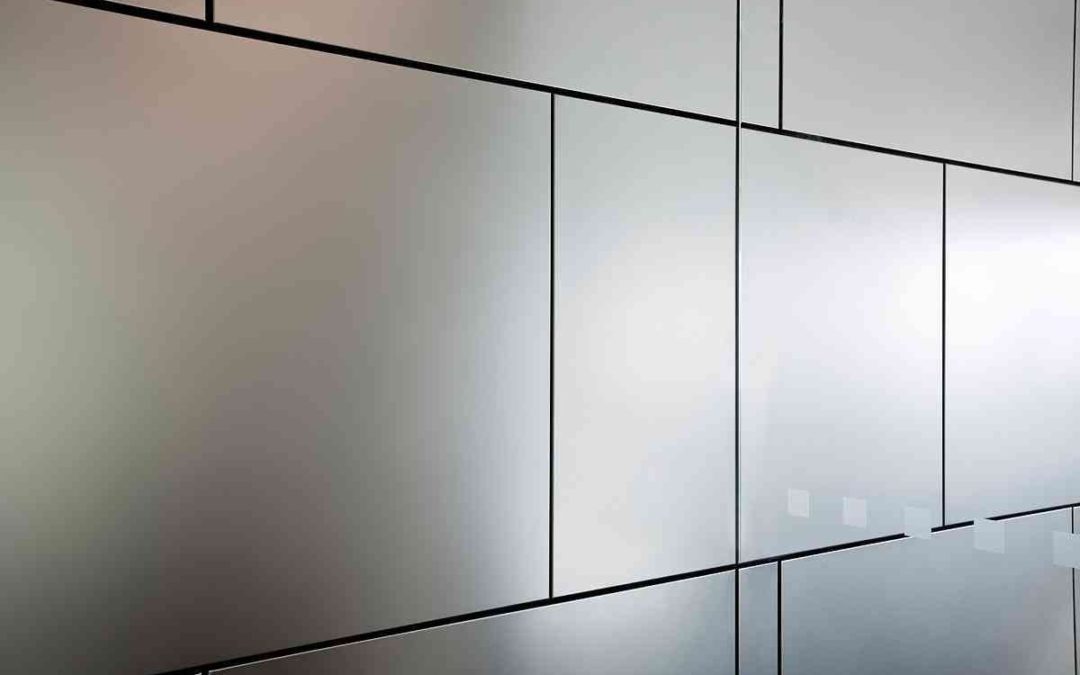
Aluminium panels are commonly used in architecture as an external facade material because they are lightweight, durable and resistant to corrosion. This makes them suitable for buildings located in rain and changing weather conditions.
Aluminium is also considered a sustainable material because it can be recycled many times without losing its properties, and recycling aluminium requires much less energy than producing new metal (European Aluminium, 2026).
Aluminium is also considered a sustainable material because it can be recycled many times without losing its properties, and recycling aluminium requires much less energy than producing new metal (European Aluminium, 2026).
I decided to use aluminum inspired by one of the examples of the Serpentine Pavilion that I studied during the research. This material has a reflective surface that mirrors the environment. And it also creates the effect of a light and almost invisible building. Since the nature around is beautiful and the back inverted pyramid can look quite massive for a human, I decided to use a material that will give the building lightness. In my project aluminium panels are used on the surface of the upright pyramid.
Limestone Panels

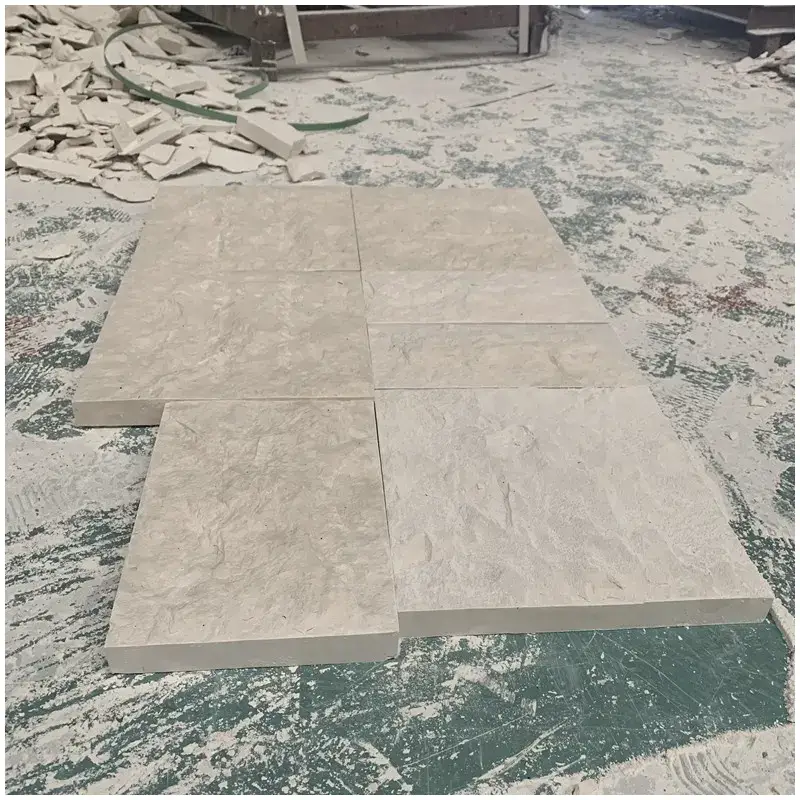
Limestone is a natural stone that widely used in architecture for walls, facades and interior finishes. It is famous for its durability, natural texture and light colour, which helps create a warm and natural atmosphere in buildings.
As a natural material, limestone requires minimal processing compared to many manufactured materials, which can reduce environmental impact. It is also long-lasting and can often be reused or recycled as building stone. Although this material is resistant to rain and temperature changes, it is quite porous and absorbs water. Therefore, this material should be covered with a protective agent (Stoneline, n. d.).
As a natural material, limestone requires minimal processing compared to many manufactured materials, which can reduce environmental impact. It is also long-lasting and can often be reused or recycled as building stone. Although this material is resistant to rain and temperature changes, it is quite porous and absorbs water. Therefore, this material should be covered with a protective agent (Stoneline, n. d.).
In my project limestone panels are used on the surface of the inverted pyramid and in interior spaces to create a natural stone texture that connects the architecture with the nature and create the cave-like atmosphere inside.
Perforated Corten Steel

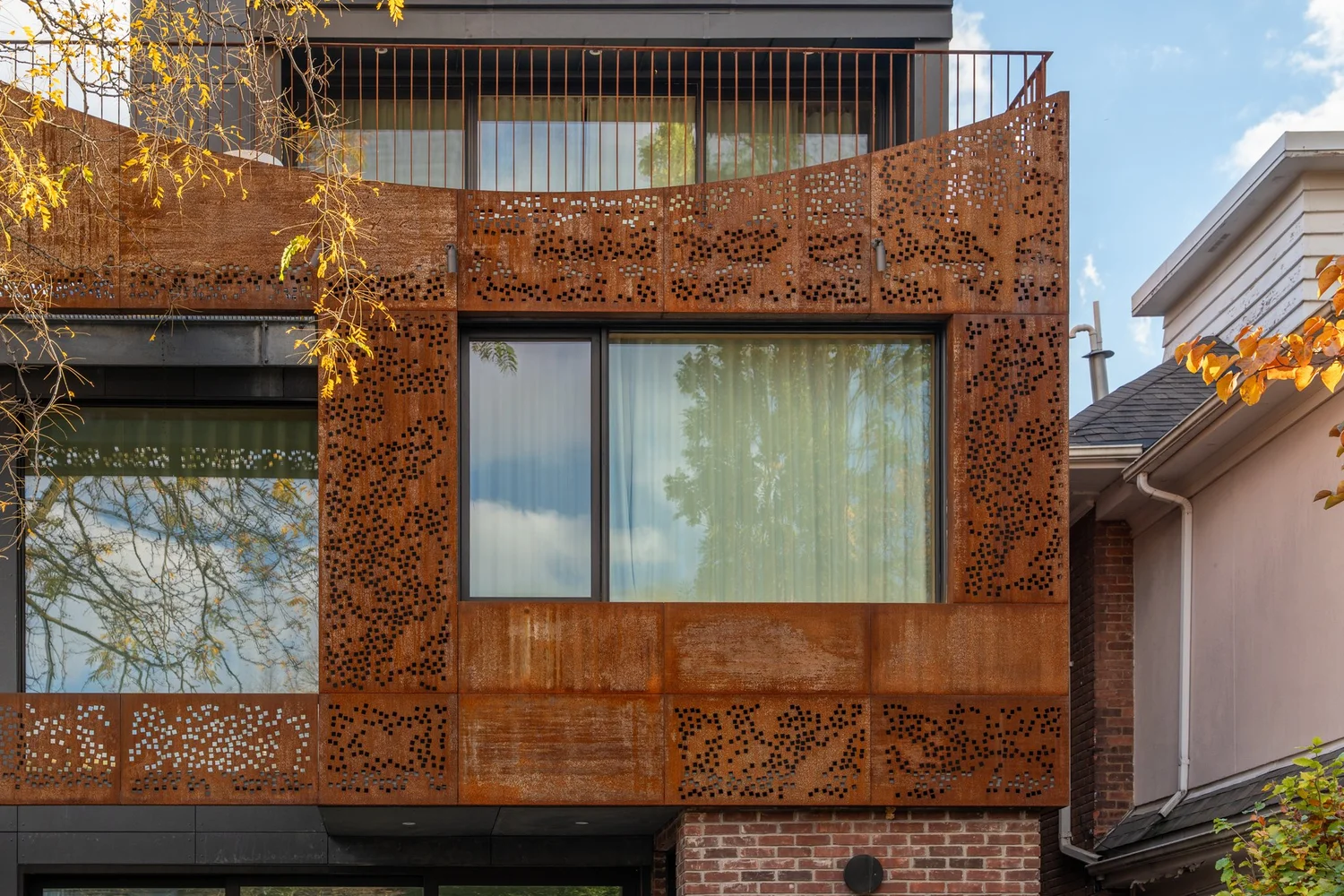
Corten steel is a type of steel that forms a protective rust layer when exposed to rain and air. This layer protects the metal and stops deeper corrosion, so the material does not need paint or extra protective coatings.
Because corten steel does not need regular treatment or repainting, it can reduce maintenance and the use of additional materials during the life of the building. Steel can also be recycled, which makes it a more sustainable construction material (SAAB, 2026).
In my project corten steel is used for ramp ways, outdoor structures (shelters) and semi-transparent walls.
Because corten steel does not need regular treatment or repainting, it can reduce maintenance and the use of additional materials during the life of the building. Steel can also be recycled, which makes it a more sustainable construction material (SAAB, 2026).
In my project corten steel is used for ramp ways, outdoor structures (shelters) and semi-transparent walls.
Another reason why I chose this material is that this colour is combined with red brick buildings around. Also, the red-brown colour creates a contrast with the many green trees around.
Structural Glass

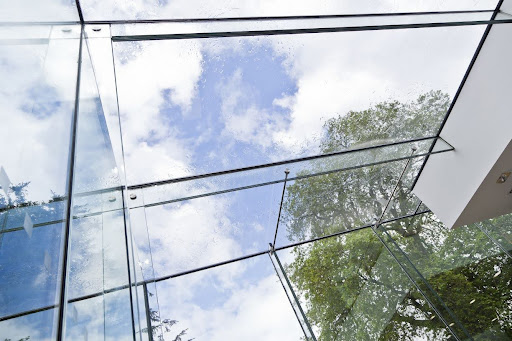
Structural glass panels are large glass elements used in architecture for roofs, facades and skylights. They allow natural daylight to enter buildings and help create bright interior spaces.
Glass panels are often used in roof structures because they can bring large amounts of daylight into interior environments, which can reduce the need for artificial lighting during the day.
Glass is also a recyclable material, which means it can be reused to produce new glass products and reduce waste in construction (Minimal Frame Projects, 2025).
In my project structural glass panels form the roof of the inverted pyramid. The glass roof and this shape of the building can give the plants the maximum amount of daylight, which is very important for them inside the building.
Glass panels are often used in roof structures because they can bring large amounts of daylight into interior environments, which can reduce the need for artificial lighting during the day.
Glass is also a recyclable material, which means it can be reused to produce new glass products and reduce waste in construction (Minimal Frame Projects, 2025).
In my project structural glass panels form the roof of the inverted pyramid. The glass roof and this shape of the building can give the plants the maximum amount of daylight, which is very important for them inside the building.
Some roof areas will include UV-B panels to support plant growth and to help to get vitamin D by the visitors.
Rammed Earth

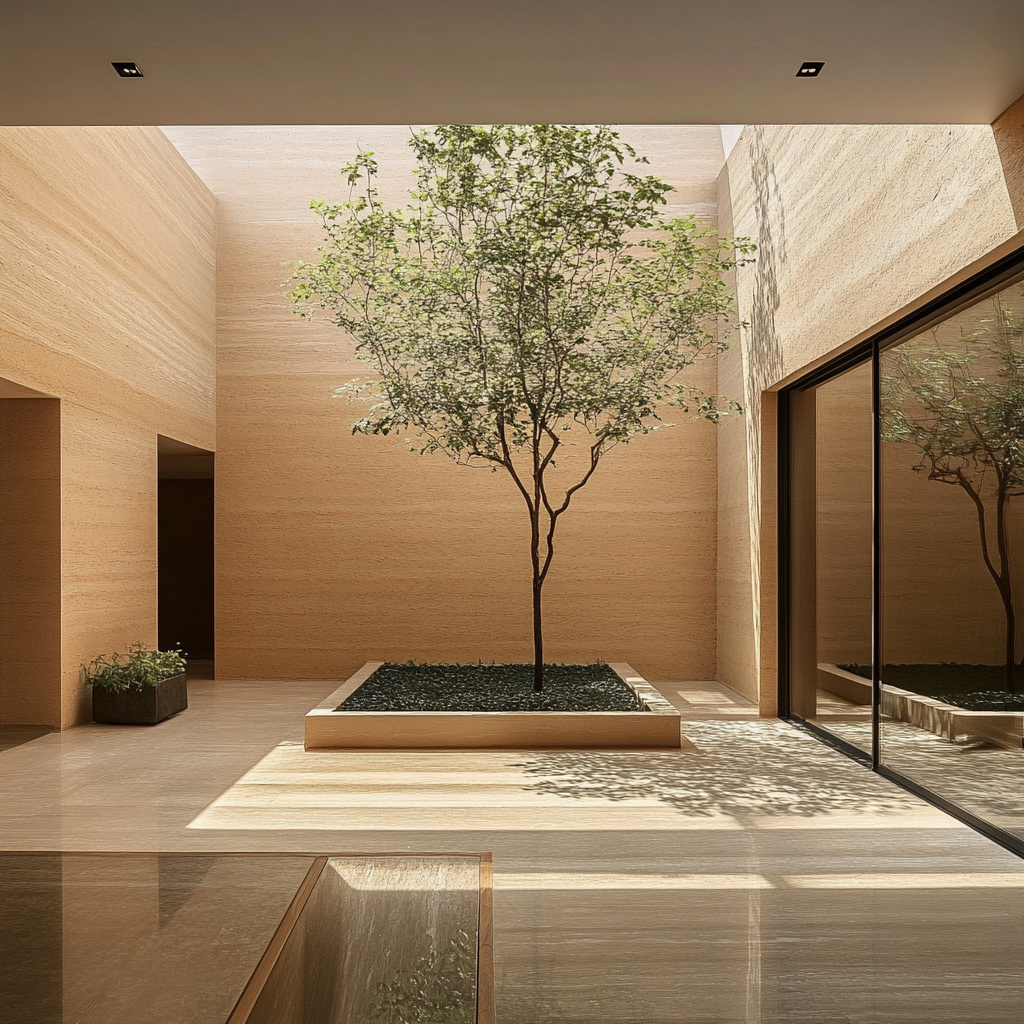
Rammed earth is a natural construction material made by compressing layers of soil inside formwork to create solid walls or landscape elements. It has been used in architecture for many centuries.
Because it is made mainly from natural earth with minimal processing, rammed earth is considered a sustainable material with a relatively low environmental impact compared to many industrial building materials.
Rammed earth also has thermal mass, which means it can help regulate temperature inside buildings by storing heat and releasing it slowly.
Rammed earth also has thermal mass, which means it can help regulate temperature inside buildings by storing heat and releasing it slowly.
This material also has the ability to absorb the water, which helps regulate humidity inside buildings and create a more stable indoor climate.
In my project rammed earth is used in landscape areas with plants, helping create a natural ground surface that connects the interior space with the idea of a natural environment.
Cork

Cork is a natural material obtained from the bark of the cork oak tree. It is often used in architecture for flooring, wall panels and acoustic surfaces because it can absorb sound and reduce echo in interior spaces.
Cork is also considered a sustainable material because the bark can be harvested without cutting down the tree, and it naturally grows back over time. Cork is waterproof and can be used in places near water (Tavares, 2021).
Because of its cellular structure, cork also provides thermal and acoustic insulation, helping create more comfortable indoor environments (Orr, 2021).
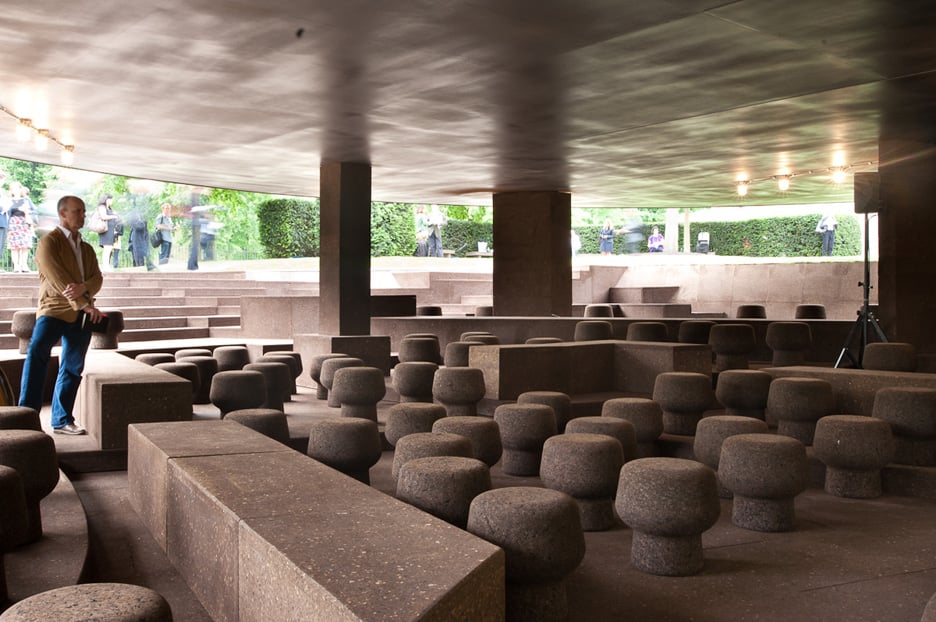
In my project cork is used for seating and acoustic elements in resting areas, helping reduce echo in the large interior space and creating a quieter atmosphere for visitors. I decided to use this material inspired by one of the examples of the Serpentine pavilion. The cork there was used inside the space as a warm, soft and sound-absorbing material.
Cork is also considered a sustainable material because the bark can be harvested without cutting down the tree, and it naturally grows back over time. Cork is waterproof and can be used in places near water (Tavares, 2021).
Because of its cellular structure, cork also provides thermal and acoustic insulation, helping create more comfortable indoor environments (Orr, 2021).
In my project cork is used for seating and acoustic elements in resting areas, helping reduce echo in the large interior space and creating a quieter atmosphere for visitors. I decided to use this material inspired by one of the examples of the Serpentine pavilion. The cork there was used inside the space as a warm, soft and sound-absorbing material.
Glass Fiber Reinforced Concrete Panels

GFRC is a lightweight concrete material reinforced with glass fibres. It is often used to create textured architectural surfaces and artificial rock formations because it can be moulded into complex shapes.
Compared to traditional concrete, GFRC panels are thinner and lighter, which reduces the amount of material used in construction.
GFRC is also durable and resistant to weather and water, which makes it suitable for interior environments with water or plants. (Designing buildings, 2026).
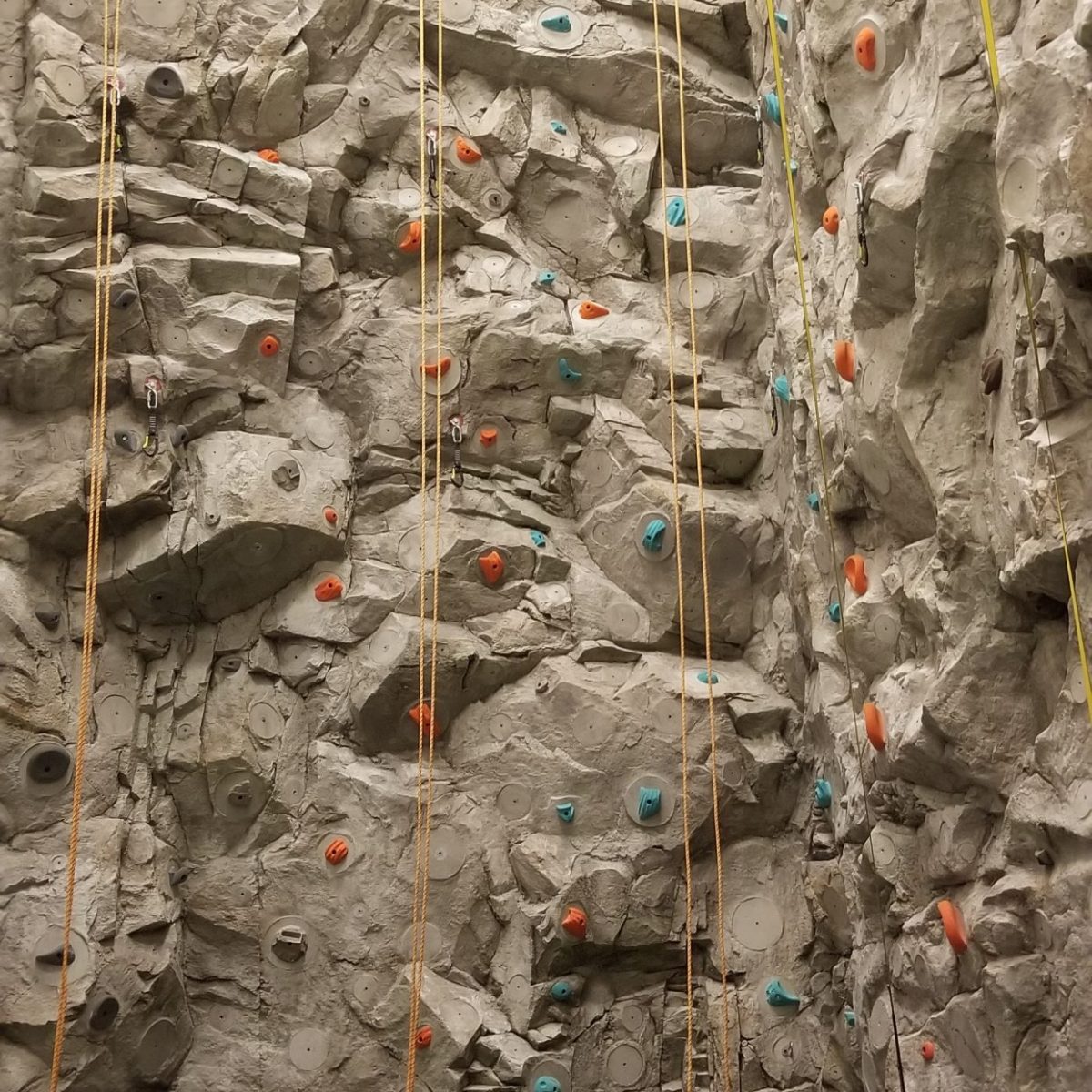
In my project GFRC panels are used to create climbing surfaces inside the inverted pyramid, forming a rock-like texture that create a gorge-like atmosphere of the space.
Compared to traditional concrete, GFRC panels are thinner and lighter, which reduces the amount of material used in construction.
GFRC is also durable and resistant to weather and water, which makes it suitable for interior environments with water or plants. (Designing buildings, 2026).
In my project GFRC panels are used to create climbing surfaces inside the inverted pyramid, forming a rock-like texture that create a gorge-like atmosphere of the space.
Image References
1. Best Metal Building (2014) ‘FAQ about steel structure’. [online image] Available at: https://bmbsteel.com.vn/storage/2024/09/10083/steel-structure-1.jpg (Accessed: 10 March 2026).
2. European Cladding Services (2020) ‘Aluminium Composite Panel’. [online image] Available at: https://ecladdingservices.com.au/cladding-systems/aluminum-composite-panel/ (Accessed: 10 March 2026).
3. EstaStone (2025) ‘Splitface Limestone Tiles’. [online image] Available at: https://whitemarblegranite.com/wp-content/uploads/2025/03/Splitface-Limestone-Wall-Facade-Tiles.webp (Accessed: 10 March 2026).
4. BVT Architect (n. d.) ‘University Ave’, Sixpenny architectural fabrication. [online image] Available at: https://images.squarespace-cdn.com/content/v1/6525d2992ecbe86aacd4c502/8d5b03f7-830d-4081-abda-9edd5833101f/perforated-corten-cladding-15.jpg?format=1500w (Accessed: 10 March 2026).
5. Gajjar, A. (2024) ‘Structural Glazing: Trends in Glass Design’, Finepoint glass. [online image] Available at: https://www.finepoint.glass/app/uploads/2024/02/unnamed-3.jpg (Accessed: 10 March 2026).
6. Rammteck (2026) ‘Rammed Earth Walls, Refined Interiots’. [online image] Available at: https://rammteck.com/storage/2328/rr_omarazzazy_Minimalist_indoor_court_yard_design_featuring_one_84e5d1b4-0954-4dc5-a2a3-e110474771f4.png (Accessed: 10 March 2026).
7. Stephenson, J. (2016) ‘Herzod & de Meuron and Ai Weiwei’s Serpentine Gallery Pavilion paid homage to its predecessors’, Dezeen. Available at: https://static.dezeen.com/uploads/2016/02/Serpentine-Gallery-Pavilion-2012-by-Herzog-and-de-Meuron-and-Ai-Weiwei_dezeen_08.jpg (Accessed: 10 March 2026).
8. Nicros (2026) ‘A.R.T.Wall’. [online image] Available at: https://nicros.com/wp-content/uploads/2020/10/Riverside-3-scaled-1200x1200.jpg (Accessed: 10 March 2026).
Text Reference
1. Worldsteel (2025) ‘About steel’. Available at: https://worldsteel.org/about-steel/ (Accessed: 9 March 2026).
2. European Aluminium (2026) ‘About Aluminium’. Available at: https://european-aluminium.eu/about-aluminium/the-material/ (Accessed: 9 March 2026).
3. Stoneline (n. d.) ‘Limestone: Properties, Applications and Varieties’. Available at: https://stoneline.co.uk/limestone-properties-applications-and-varieties/ (Accessed: 9 March 2026).
4. SSAB (2026) ‘SSAB Corten Steel. A Natural Beauty’. Available at: https://www.ssab.com/en-gb/brands-and-products/ssab-cor-ten (Accessed: 9 March 2026).
5. Minimal Frame Projects (2025) ‘Exploring the Modern Marvels: The Versatility of Structural Glass’. Available at: https://minimalframeprojects.co.uk/exploring-the-modern-marvels-the-versatility-of-structural-glass/ (Accessed: 10 March 2026).
6. 2050 materials (2026) ‘2050 Sustainable Materials Series: Rammed Earth’. Available at: https://2050-materials.com/blog/2050-sustainable-materials-series-rammed-earth/ (Accessed: 10 March 2026).
7. Tavares, D. (2021) ‘Cork: Sustainable by nature’, Noveme. Available at: https://noveme.co.uk/blogs/stories/what-is-cork (Accessed: 10 March 2026).
8. Orr, J. (2021) ‘What are the Physical Properties of Cork?’, Cork sol.. Available at: https://corksoluk.com/help-articles/what-are-the-physical-properties-of-cork/ (Accessed: 10 March 2026).
9. Designing Buildings (2026) ‘Glass reinforced concrete’. Available at: https://www.designingbuildings.co.uk/wiki/Glass%20reinforced%20concrete (Accessed: 10 March 2026).



Okay, but this isn't complete, is it???
ReplyDelete